What we do
One partner for the whole stack — no more agency-by-agency guess-and-hope.
Sixteen capabilities on one data spine, so the question is never which team gets the credit — it is which move produced the revenue, and what that tells us to fund next. Data to research to creative to launch to optimization, run as a single loop rather than sixteen separate ones.
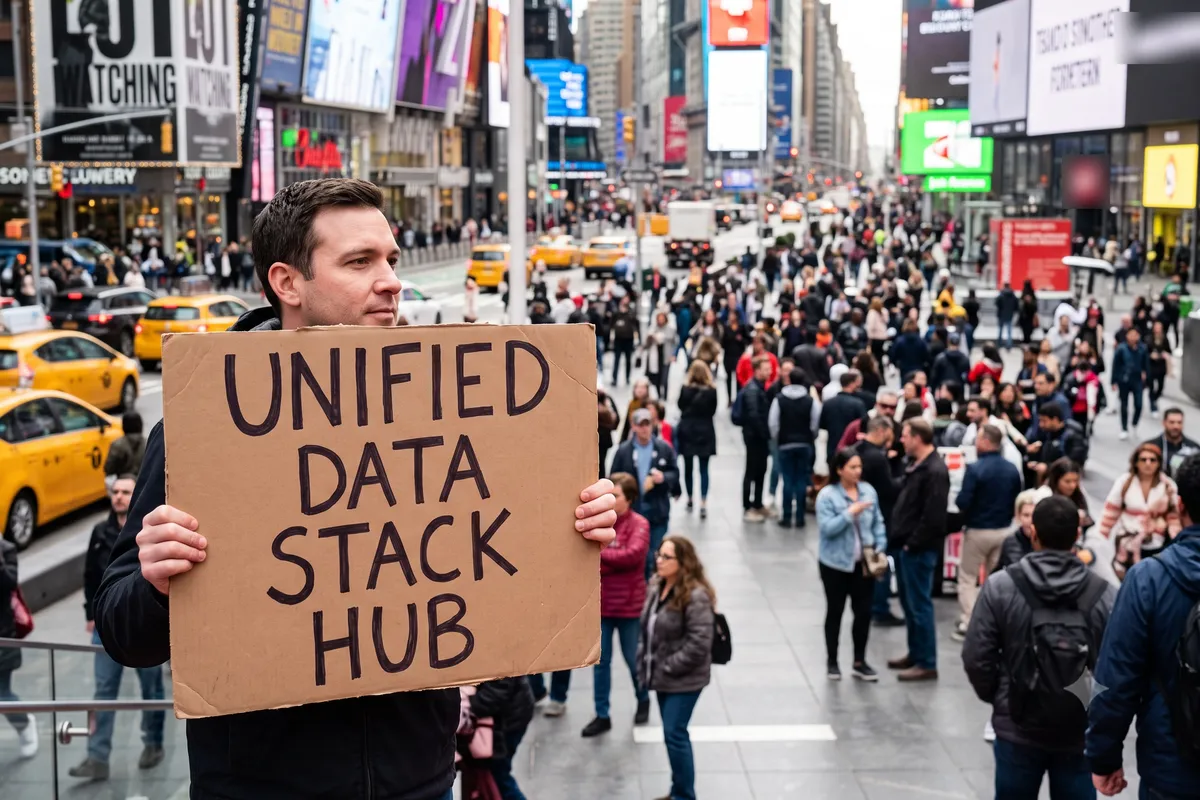
Stop starting from zero.
Start from memory.
Specialization
Broad coverage, narrow focus.
The service list is wide on purpose — the data spine underneath, then paid, creative, answer-engine optimization, measurement and the agents that operate them — because growth leaks in the gaps between specialists who each own one slice.
What you get is the range of an agency without the cost and coordination overhead of assembling one in-house: one team, one number, and specialists who go deep on the two or three channels that actually move your business.
-
A strategy per account
Every engagement starts with a read of your market and your data, not a template. Which of the sixteen capabilities you actually need is an output of that read — most accounts do not need all of them, and we would rather say so early.
-
Operators, not a queue
You get a named growth strategist plus the specialists the work calls for. The agents handle throughput; the people handle judgment. Nobody hands your account to a rotating pool.
-
Judged on revenue
We optimize toward the number your business runs on — blended return, qualified pipeline, acquisition cost — and report against it weekly. Channel-level vanity metrics are available, but they are not the scoreboard.
Flagship
Research to revenue — one system.
Awareness through conversion to retention, run as a single loop by one team — so growth stops leaking in the gaps between agencies, channels and handoffs.
What we do
Five pillars. Sixteen services. One system.
Most accounts need three or four of these, not all sixteen — which ones is an output of the audit rather than an opening position. All of them report into the same data spine, so learnings move sideways instead of stopping at a channel boundary, and no two of them can quietly disagree about what a sale was.
-
Data & Measurement
The spine the other four run on, and the deepest pillar for a reason. Funnels, warehouse, operational databases, pipelines, activation and governance — clicks, sessions, leads, orders and refunds captured once, stitched to a person and joined to revenue in a warehouse you own, so there is one definition of a sale and every dashboard, bid and board slide is reading the same one.
- Growth Data Infrastructure
Clicks, sessions, leads, orders and refunds land in one warehouse you own — stitched to a person, joined to revenue, and reconciled against the platforms that each claim the same sale. It is the layer every other service reads from and writes back to, so the number on the dashboard, the number the optimizer bids against and the number in your finance export are one number.
- Full-Funnel Dashboards
Meta, Google, LinkedIn and TikTok pulled into a single live funnel — spend to revenue, blended and per-channel, refreshed continuously.
- Sales Funnel Management
Lead, qualified, opportunity, won — defined once, instrumented inside the CRM you already run, and managed as a single pipeline instead of four teams’ spreadsheets. We set the stage definitions, wire the events that move a record between them, and measure conversion, velocity and drop-off at every step, so the place the funnel actually leaks is a number on a screen rather than an opinion in a meeting.
- Marketing Funnels — Clicks to Sales
The path from an impression to a paid invoice, reconstructed end to end: click IDs captured at the source, sessions stitched across devices, leads matched to CRM records and orders matched back to the campaign that earned them. Every channel is measured on the revenue at the end of the funnel rather than the conversion event closest to it, and the platforms that each claim the same sale are reconciled against one definition.
- Data Warehouse Management
Redshift, BigQuery, Snowflake or Postgres — chosen for your volume, stood up in your own cloud account, and then actually managed: modeled schemas, scheduled transformations, partitioning and sort keys that match how you query, and a cost line that gets watched. The warehouse is the layer every other service reads from, so it is treated as infrastructure rather than as a place exports go to rest.
- Database Management
The operational databases your growth stack depends on — customer records, subscriptions, events, product catalogs — kept fast, clean and backed up. Schema design and migrations, indexing and query tuning, deduplication and hygiene rules, replication so analytics never contends with production, and monitoring that pages someone before a slow query becomes a checkout that times out.
- Data Pipelines & ETL
Ad platforms, analytics, CRM, billing, support and your product database, pulled into the warehouse on a schedule and transformed into models the business can read. Ingestion is idempotent, transformations are tested before they land, schema changes upstream raise an alert instead of silently emptying a column, and every run is logged — so a missing number has a cause you can point at.
- Customer Data Activation
Segments defined once in the warehouse and synced to the places they get used — ad platforms, email and SMS, the CRM, in-product messaging. High-value cohorts, churn risk, lapsed buyers and suppression lists stay current automatically, matched on hashed first-party identifiers, so the audience your campaign runs on is the one your data actually supports rather than a CSV somebody exported last month.
- Data Governance & Consent
Consent captured properly and carried with the record, access granted by role rather than by whoever asked, retention windows that actually delete, and deletion requests that propagate through every join and every downstream tool. Definitions live in one catalog so a metric means the same thing in the boardroom as in the warehouse. It is the unglamorous half of a data spine, and the half that gets audited.
Clicks, sessions, leads, orders and refunds land in one warehouse you own — stitched to a person, joined to revenue, and reconciled against the platforms that each claim the same sale. It is the layer every other service reads from and writes back to, so the number on the dashboard, the number the optimizer bids against and the number in your finance export are one number.
Meta, Google, LinkedIn and TikTok pulled into a single live funnel — spend to revenue, blended and per-channel, refreshed continuously.
Lead, qualified, opportunity, won — defined once, instrumented inside the CRM you already run, and managed as a single pipeline instead of four teams’ spreadsheets. We set the stage definitions, wire the events that move a record between them, and measure conversion, velocity and drop-off at every step, so the place the funnel actually leaks is a number on a screen rather than an opinion in a meeting.
The path from an impression to a paid invoice, reconstructed end to end: click IDs captured at the source, sessions stitched across devices, leads matched to CRM records and orders matched back to the campaign that earned them. Every channel is measured on the revenue at the end of the funnel rather than the conversion event closest to it, and the platforms that each claim the same sale are reconciled against one definition.
Redshift, BigQuery, Snowflake or Postgres — chosen for your volume, stood up in your own cloud account, and then actually managed: modeled schemas, scheduled transformations, partitioning and sort keys that match how you query, and a cost line that gets watched. The warehouse is the layer every other service reads from, so it is treated as infrastructure rather than as a place exports go to rest.
The operational databases your growth stack depends on — customer records, subscriptions, events, product catalogs — kept fast, clean and backed up. Schema design and migrations, indexing and query tuning, deduplication and hygiene rules, replication so analytics never contends with production, and monitoring that pages someone before a slow query becomes a checkout that times out.
Ad platforms, analytics, CRM, billing, support and your product database, pulled into the warehouse on a schedule and transformed into models the business can read. Ingestion is idempotent, transformations are tested before they land, schema changes upstream raise an alert instead of silently emptying a column, and every run is logged — so a missing number has a cause you can point at.
Segments defined once in the warehouse and synced to the places they get used — ad platforms, email and SMS, the CRM, in-product messaging. High-value cohorts, churn risk, lapsed buyers and suppression lists stay current automatically, matched on hashed first-party identifiers, so the audience your campaign runs on is the one your data actually supports rather than a CSV somebody exported last month.
Consent captured properly and carried with the record, access granted by role rather than by whoever asked, retention windows that actually delete, and deletion requests that propagate through every join and every downstream tool. Definitions live in one catalog so a metric means the same thing in the boardroom as in the warehouse. It is the unglamorous half of a data spine, and the half that gets audited.
- Growth Data Infrastructure
-
Performance
Where the money moves. Budget follows evidence around the clock rather than waiting for a reporting cycle, with auto-scale and auto-kill thresholds set against the acquisition cost your business actually runs on — not a platform-reported proxy for it.
- AI Performance Marketing
We test more angles, cut the losers sooner and move budget onto winners around the clock — so the same spend does more work. No waiting for a Monday report to find out a campaign died on Tuesday.
- Lead Generation
We prospect net-new audiences, qualify them, and warm them up — not just harvest the demand you already have.
We test more angles, cut the losers sooner and move budget onto winners around the clock — so the same spend does more work. No waiting for a Monday report to find out a campaign died on Tuesday.
We prospect net-new audiences, qualify them, and warm them up — not just harvest the demand you already have.
- AI Performance Marketing
-
Creative
The biggest performance lever left, and the one most often pulled blind. Hundreds of on-brand variants from a single brief, every one checked against your guidelines before it goes near a live account, refreshed the moment fatigue shows up in the numbers.
- AI Video & Static Ads
Hundreds of on-brand video and static variants from a single brief, each tuned to a specific hook, audience and platform — so you stop rationing creative and start testing broadly enough to actually find the winners.
Hundreds of on-brand video and static variants from a single brief, each tuned to a specific hook, audience and platform — so you stop rationing creative and start testing broadly enough to actually find the winners.
- AI Video & Static Ads
-
Organic & AEO
Search did not die, it split. Half your buyers still type into Google and the other half describe their situation to an assistant. This pillar covers both surfaces at once — ranking signals and citation patterns, from the same content.
- AEO — SEO for LLMs
Posts drafted in your voice, built to rank on Google and get recommended by ChatGPT, Claude, and Perplexity.
Posts drafted in your voice, built to rank on Google and get recommended by ChatGPT, Claude, and Perplexity.
- AEO — SEO for LLMs
-
Intelligence & Agents
What reads the data and what acts on it: continuous competitor intelligence scored against everything the account has already learned, and agents that operate the tools you already run. This is what turns a set of campaigns into a system that remembers.
- Market Research
Competitor teardowns and live angle detection, so every campaign starts with an edge rather than a guess.
- Agentic Marketing
You already have the tools and the ideas. Our agents do the clicking: pulling audiences, generating creative, and deploying straight into HubSpot, Marketo, and Salesforce.
Competitor teardowns and live angle detection, so every campaign starts with an edge rather than a guess.
You already have the tools and the ideas. Our agents do the clicking: pulling audiences, generating creative, and deploying straight into HubSpot, Marketo, and Salesforce.
- Market Research
Each service page carries its own proof module. Where a module shows moving numbers it is a simulation, labeled as one — real client results will appear in the case studies once clients approve them; today's are illustrative scenarios.
A more measurable approach
Strip the complexity. Keep the receipts.
Growth teams across eight regions.
Startups, D2C brands and B2B growth teams in the US, UK, Europe, the Middle East, Singapore, Australia, New Zealand and Japan.
- United States
- United Kingdom
- Europe
- Middle East
- Singapore
- Australia
- New Zealand
- Japan
Our difference
We are judged on the how as much as the what.
-
We read your account before you sign anything
The demo runs on your data, not a canned deck. You see where we think your next dollar should go, and what we would stop doing, before there is a contract in the conversation.
-
Channels dovetail instead of competing
One team owns the blended number, so nobody is incentivized to claim a conversion that another channel earned. Learnings move sideways — a hook that works in paid becomes next month’s landing page and next quarter’s answer-engine content.
-
Agents do the clicking, people do the deciding
Throughput comes from automation, judgment does not. Nothing ships to a live account without a human approving it, and every automated action is logged where you can see it.
-
One live view, not a monthly deck
The dashboard our operators work from is the dashboard you get. If we are looking at a number you cannot see, the setup is wrong. Weekly readouts are written in plain English on top of it.
The compounding advantage
Most tools start from zero. We start from memory.
Every launch teaches the system what works for your brand, your audience, your market. Winning angles, hooks, and creatives become the foundation for the next campaign — so your performance compounds while competitors start over.
- Every campaign feeds a shared brand memory
- Winning patterns get reused and remixed
- Your advantage grows every single week
FAQ
Frequently asked questions
-
You probably do not need all sixteen, and we will tell you which ones we would start with after looking at your account. Most engagements begin with two — usually where the gap between spend and result is widest — and widen once the loop is demonstrably working. The data spine is the common exception: it is the one most accounts want early, because the rest is harder to judge without it.
-
Either, or neither. Some clients move everything across; more common is that your team keeps brand, offer and category judgment while we take throughput, measurement and the work nobody has hours for. The split is agreed before we start.
-
Month to month, priced in US dollars, with no lock-in. Managed is done-for-you; the platform option gives your team the same agents to run in-house. There is no long-term contract to escape from if it is not working.
-
Brief to live is typically measured in days rather than weeks, because the build-and-deploy step is automated. What takes longer is the part worth taking time over — agreeing targets, the profile, and what qualifies as a result.
-
Your ad accounts, your analytics and whatever CRM or marketing automation you already run, with scoped credentials you issue and can revoke. We work inside your existing accounts so their history and learning phases are preserved.