Retention economics beat acquisition tactics
A five-point improvement in repeat rate is worth more than most acquisition optimizations you will run this year.
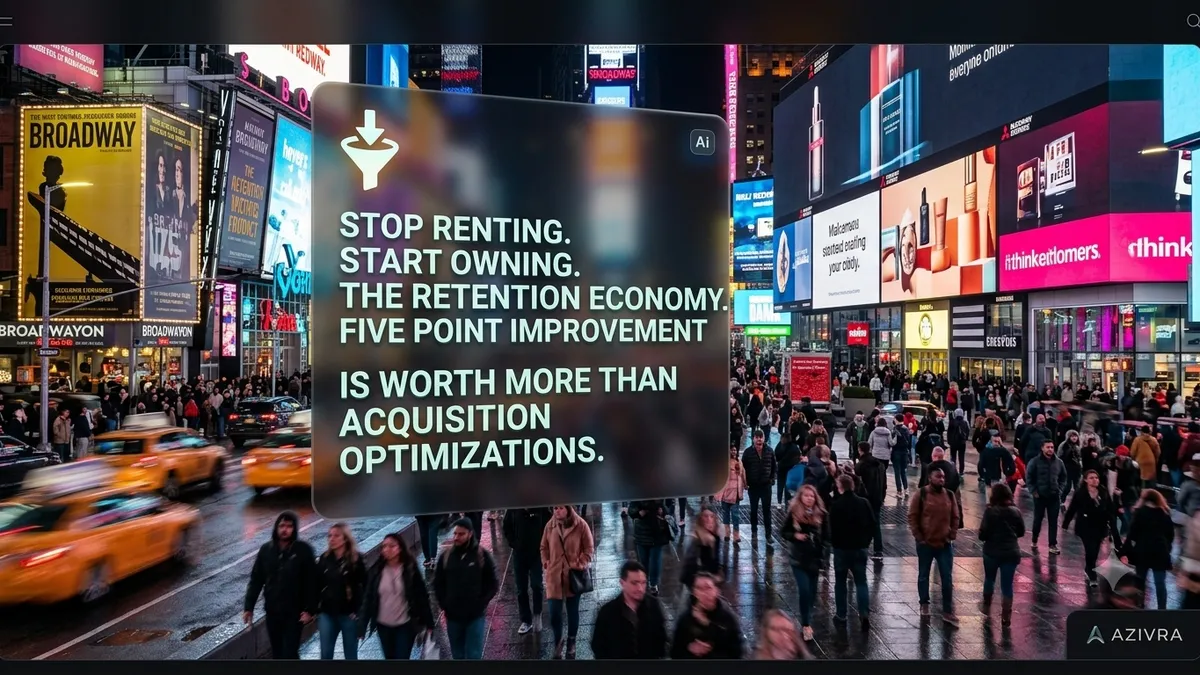
Acquisition is a rented audience. Retention is an owned one, and the maths on the two diverges faster than most models assume.
Where the leverage actually sits
Cut acquisition cost by ten per cent and you have improved one input, once. Raise repeat purchase rate by five points and you have changed the value of every customer you will acquire from now on — including the ones acquired at the old, worse cost.
The second effect compounds. The first does not.
Why it gets neglected anyway
Because acquisition is legible. It has dashboards, daily numbers and an obvious owner. Retention shows up months later, credit for it is genuinely ambiguous, and the work is unglamorous: onboarding sequences, replenishment timing, fixing the reason people churned in the first place.
Organizations optimize what they can see attributed to a person. That is an org design problem wearing a marketing costume.
What we look at first
- Second-order rate, by cohort and by acquisition channel. Channels differ enormously here, and it is usually invisible in blended reporting.
- Time to second purchase. Where the distribution has a cliff, that is your intervention window, not a guess.
- Which first products predict a second order. Frequently not the ones the ads push.
In our experience, that last one moves more acquisition budget than any bidding change.
The connection back to acquisition
Better retention raises what you can afford to pay for a customer, which lets you buy inventory your competitors cannot justify. That is the real prize: not spending less, but being able to outbid people who are optimizing the same auction with worse unit economics.